
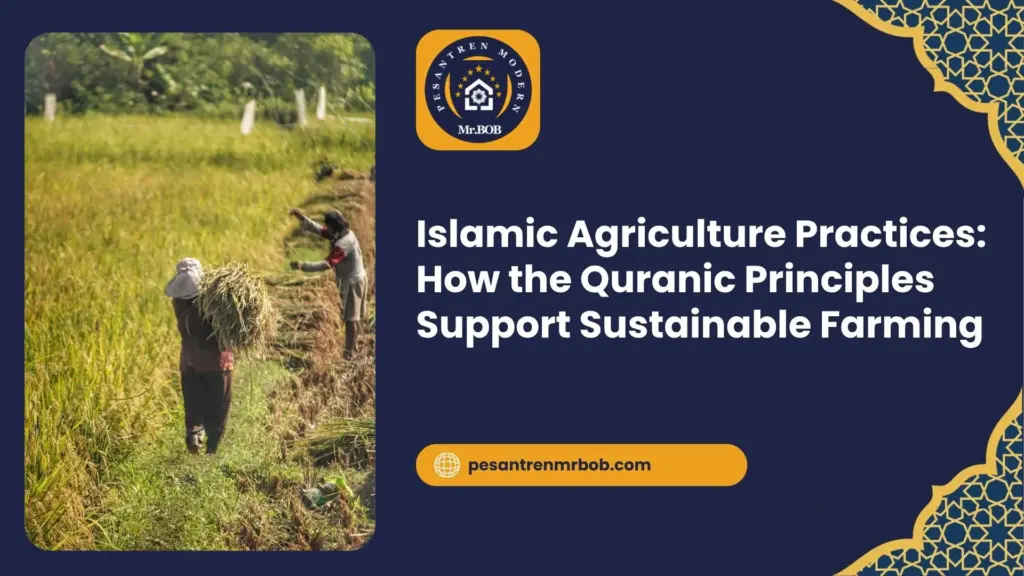
Pesantren Modern Mr.Bob – In 2020, the Food and Agriculture Organization published a groundbreaking study exploring the deep connection between Islamic teachings and environmental care. The report shed light on how faith-based frameworks can guide land management and food production without creating wasteful footprints. Interestingly, many scholars agree that historical farming traditions in Islam closely mirror what we define as sustainability today—focusing heavily on keeping soil fertile, protecting livestock, and conserving water resources.
As climate change and global food security become urgent crises, these time-tested ideas are more valuable than ever. Building resilient farms requires wisdom from all sources. Learning about eco-friendly farming is not exclusive to Muslims; anyone looking to cultivate the land responsibly can draw practical lessons from Islamic agricultural heritage. Ultimately, faith and ecology intertwine here to offer a mindful perspective on resource management that the modern world cannot afford to ignore.
Understanding the Foundation of Islamic Agriculture
At its core, the Islamic approach to farming views humans as temporary caretakers of the Earth rather than its absolute owners. This foundational concept is known as khalifah. It establishes a profound moral duty to protect the planet and preserve its delicate ecosystems for all living creators.
When growing food, the goal is to balance human needs with the natural capacity of the land. Exploiting the soil for quick, short-term profits goes against this philosophy. Instead, farmers are encouraged to nurture the fields so they remain fertile for future generations. In an era marked by resource depletion and habitat loss, reclaiming this sense of stewardship offers a reliable path forward.
The Quranic View of Nature and Agriculture
The Quran frequently prompts readers to reflect on growing plants, flowing rivers, and fertile fields as clear signs of divine wisdom. Within this framework, farming is never treated as a mere commercial transaction; it is a sacred trust connecting people directly to the natural world. Consequently, traditional practices emphasize gratitude, restraint, and careful management. When a farmer views the land as a borrowed gift, their operational choices naturally shift toward long-term preservation rather than reckless exploitation.
Agriculture as a Blessing
Sacred texts routinely describe lush gardens, ripening fruits, and healthy livestock as blessings meant to sustain human life. These descriptions serve as warnings against greed and wastefulness. Responsible harvesting means gathering what you need while protecting the underlying systems that generate life. Much like an experienced orchardist who prunes a tree to ensure harvests for decades, mindful farmers focus on nurturing the environment rather than draining its life force.
The Balance of Creation
Harmony and balance are central themes in the natural order. Nature thrives on complex, interconnected systems that require a steady equilibrium to function. Islamic ecological principles urge farmers to maintain this harmony rather than disrupt it through aggressive practices. Relying too heavily on toxic chemicals, over-irrigating fields, or clearing forests recklessly directly violates the core rule of cosmic balance.
Climate Change and Islam: The Prophetic Teachings on Environmental Protection
Stewardship and Environmental Responsibility
Stewardship stands as a powerful pillar in faith-based ecology. Because humans are trusted with the planet’s wealth, they are accountable for how they manage these resources. This accountability changes how daily farming decisions are made. Whether a grower is treating the soil or managing a clean water supply, they must consider the long-term impact of their choices. This mindset pushes businesses to look beyond immediate cash flows and focus on generational sustainability.
The Concept of Khalifah
Embracing the role of a steward transforms agriculture from a purely commercial industry into a moral calling. Farmers become guardians of the landscape. This perspective ensures that choices protect both human communities and local wildlife. Just as a trusted manager handles a valuable estate with extreme care, people must protect natural resources for the future, proving that economic development can coexist with deep ethical values.
Water Conservation in Islamic Teachings
Water is treated as an incredibly precious asset within Eastern traditions. Even when performing daily religious ablutions, believers are strictly warned against wasting a single drop. As N. Faruqui notes in Water Management in Islamic Law (2021), historical legal frameworks created advanced rules for fair water sharing and strict conservation. These ancient laws directly support sustainable farming by prioritizing high-efficiency irrigation and smart consumption—a guide that remains vital for drought-prone regions today.
Efficient Irrigation Methods
Throughout history, early Islamic civilizations engineered remarkable irrigation networks that boosted crop yields while eliminating water waste. Features like underground channels, public reservoirs, and community-managed distribution networks showed a deep mastery of resource conservation. Modern eco-friendly farming continues to champion this efficiency. The rule is simple: give crops the exact moisture they need, but never allow unnecessary runoff.
Preventing Water Waste
Waste is viewed as a major failure in resource management, especially on a farm. Over-watering crops does more than waste a resource; it damages topsoil quality, drains local aquifers, and ruins long-term farm productivity. Avoiding excess and planning watering schedules carefully helps ensure that local communities do not run dry in the years ahead.
Protecting Soil Health and Fertility
Rich, living soil is the starting point for all successful agriculture. Without fertile ground, keeping a population fed becomes an impossible task. Traditional eco-friendly farming protects ground quality through natural land management, avoiding harsh chemicals that strip the earth of vital nutrients. Long before modern science discussed crop rotation or organic composting, traditional growers used these exact tools to keep their fields alive and productive.
The Importance of Land Care
Neglecting usable land is highly discouraged; instead, restoring dead soil and planting crops are seen as noble actions. This mindset favors long-term investments in field health over quick, destructive harvests. The goal of a responsible grower is to leave their plot in a healthier state than they found it, which directly supports local food security and biodiversity.
Biodiversity and Crop Diversity in Islam
Ecosystems need variety to stay strong, and farms operate the same way. Planting only one crop might seem efficient at first, but it weakens the ecosystem and leaves fields vulnerable to pests and diseases. Traditional green farming avoids this trap by growing a wide variety of plants. Scriptural references often highlight a rich tapestry of different fruits and grains, celebrating the natural diversity of creation.
Learning from Natural Ecosystems
Healthy wilderness areas rely on different species working together in perfect harmony. Farmers who copy these natural patterns build properties that survive tough weather and pest outbreaks. By protecting helpful insects, mixing crop varieties, and leaving space for wild habitats, a farm becomes a self-sustaining ecosystem over time.
The Ethics of Animal Welfare
Kindness to animals is a non-negotiable rule in these traditions. Farm livestock are treated as living creatures that feel pain, not just as walking financial assets. Ethical husbandry requires providing clean shelters, fresh water, proper nutrition, and freedom from stress. Treating animals with respect results in healthier herds and builds a more compassionate, stable farming business.
Compassion in Livestock Management
Historical teachings consistently condemn cruelty to animals and demand gentle handling. Farmers must look after their livestock responsibly throughout the animals’ lives. Beyond the moral duty, compassion brings practical business advantages; low-stress livestock are naturally more resilient and productive.
Traditional Islamic Permaculture Principles
A recent paper in the Sustainability Journal, Traditional Islamic Permaculture (2023), shows that historical farming designs naturally used what we now call permaculture. These old systems relied on clever water harvesting, local plant choices, and closed-loop recycling. They relied on environmental wisdom passed down through generations, proving that true sustainability is a timeless practice.
Lessons from Historical Islamic Farming Communities
From ancient Spain to the fields of Central Asia, historical communities built farming networks that balanced high food production with genuine environmental care. They constructed smart canal systems, rotated crops, and preserved topsoil because they knew that destroying nature would ruin future harvests. Their enduring success gives modern organic farmers a proven blueprint for fighting climate change today.
Community-Based Resource Management
Historically, rural communities managed shared water rights, pastures, and forests together. This teamwork prevented local arguments and guaranteed that everyone got a fair share. Prioritizing community survival over greedy competition creates a cooperative model that looks exactly like modern sustainable development.
Sustainable Land Ownership and Use
According to a study by Cambridge University Press, Land Tenure and Agriculture in Islamic History (2019), owning property came with social duties. Land owners could not leave fertile fields empty if that land could feed hungry people. Using land productively was seen as a direct gift to society, a rule that stops people from buying up agricultural land just for financial speculation.
Reviving Unused Land
An old legal rule gives people rights to land if they clear and revive abandoned fields. Bringing dead zones back to life feeds communities and takes the pressure off over-worked farming areas. This method is incredibly useful today for stopping desert expansion and fixing damaged landscapes worldwide.
Reducing Waste in Agricultural Production
Cutting out waste is a foundational rule of green living. Wasting food, spilling water, or destroying usable materials is heavily criticized. Sustainable farming aims to get maximum value from every seed and drop of water, an approach that perfectly matches modern carbon-footprint reduction goals.
From Harvest to Consumption
Green habits cannot stop once the crops leave the field. Setting up proper storage facilities and safe transport networks stops food from rotting before it reaches grocery stores. Keeping waste low across the entire supply chain protects natural resources and keeps food prices stable for families.
The Connection Between Farming and Social Justice
Economic success must always walk hand-in-hand with social duty. Farming is no different. Growers are expected to support their towns through charity, fair working wages, and honest trading. True sustainability must feed and support the whole community, not just make a few wealthy estate owners richer.
Supporting Vulnerable Communities
Historically, a bumper harvest was seen as a perfect chance to feed the poor and less fortunate. Sharing the earth’s wealth builds tight-knit, resilient towns. True environmental sustainability cannot be separated from social fairness; they are two sides of the same coin.
Reference Insight: Fazlun Khalid, in Environmental Ethics in Islam (2020), argues that protecting the environment is an identical duty to protecting human society, as both reflect our core responsibilities to creation.
Modern Sustainable Farming Through an Islamic Lens
Today’s green initiatives focus on carbon reduction, renewable energy, and soil protection. These modern goals match historical faith values perfectly. Merging ancient ethics with modern tech gives growers a complete toolkit for eco-friendly development.
Technology and Tradition Working Together
New technology and old wisdom are not enemies. Drip-irrigation tubes, data-driven satellite farming, and organic soil sensors help farmers become better stewards of the land. When used with a moral purpose, tech becomes a powerful tool for preserving the earth.
Climate Change and Agricultural Resilience
Unpredictable weather and shifting heat patterns threaten crop outputs everywhere. Sustainable farming fights back by saving water, building rich organic soils, and growing diverse plant species. These steps help farms survive extreme weather while keeping local wildlife safe.
Preparing for Environmental Uncertainty
Diverse farms weather storms much better than single-crop factories. Setting up efficient water systems and protecting soil bacteria helps fields survive sudden droughts. Planning for climate trouble now keeps our food lines moving tomorrow.
Food Security as a Shared Responsibility
Feeding the world takes more than just growing tons of grain; it requires smart resource care and fair sharing systems. Eliminating farm waste and protecting fields ensures there will be enough food for the future, turning food security into a community job.
Building a Sustainable Food Future
The choices we make with our soil today dictate what our grandchildren will eat tomorrow. Thinking about the long-term impact of farming stops us from ruining the earth for quick profits, creating a steady food supply for the next generation.
Reference Insight: The Yale Forum on Religion and Ecology, in Eco-Islam: Beyond the Principles (2022), highlights how faith-based morals provide actionable solutions for modern crises like global food security.
Why Islamic Agricultural Principles Matter Today
As climate issues grow worse, people are searching for deep moral guides to save the planet. Faith-based farming offers a complete path that merges spiritual values with scientific land care. It reminds us that saving the environment is an absolute moral duty.
Reference Insight: Studies from the FAO (2020), IDRC (2021), and Cambridge University Press (2019) collectively show that historical eco-friendly farming models hold the exact answers needed for modern green agriculture.
Conclusion
Traditional agricultural ethics offer far more than just a look into history. They provide a living, practical framework for solving today’s biggest environmental and food crises. By focusing on true stewardship, strict water care, biodiversity, animal respect, and social fairness, these old rules line up perfectly with modern environmental science. Sustainability is not a new commercial trend; it is an ancient human duty. By combining ethical values with modern technical tools, communities can build thriving food systems that feed our populations while healing the planet for the future.
If you’d like to explore more insights and valuable information about Islamic boarding schools, feel free to browse other articles on the Pesantren Modern Mr.BOB. website. Stay updated with our latest programs, educational content, and student activities by following us on Instagram and TikTok. If you have any questions or would like personalized guidance, don’t hesitate to contact us via WhatsApp anytime. Our team is always ready to assist you.
References
- Food and Agriculture Organization. (2020). Agriculture and Forestry in the Islamic Tradition. FAO Digital Library. https://www.fao.org/documents
- Al-Hassan Academic. (2022). The Islamic Garden and Agricultural Sustainability. Journal of Agricultural History. https://www.jstor.org
- Faruqui, N. (2021). Water Management in Islamic Law. International Development Research Centre. https://www.idrc.ca/en/book/water-management-islamic-world
- Eco-Justice Press. (2023). Traditional Islamic Permaculture. Sustainability Journal. https://www.mdpi.com/journal/sustainability
- Cambridge University Press. (2019). Land Tenure and Agriculture in Islamic History. Cambridge Core. https://www.cambridge.org/core