
Pesantren Modern Mr.Bob – Let’s be real for a moment: modern life is incredibly exhausting. Between the nonstop pings on our phones, work deadlines, and the mental weight of daily responsibilities, our brains rarely get a chance to just reset. It feels like a strictly modern dilemma, but the tools to fix it have actually been around for centuries. For instance, a 2021 study in the Journal of Religion and Health looked into the psychotherapeutic effects of Islamic prayer, showing how these practices can naturally boost emotional regulation. Even the American Psychological Association has explored the neurobiology of mindfulness, proving that quiet, reflective spiritual routines change how our brains handle intense pressure. When you look at the data, it is easy to see why waking up for night prayers can reduce stress in ways that modern medicine is only just starting to fully understand.
Understanding Tahajjud Prayer
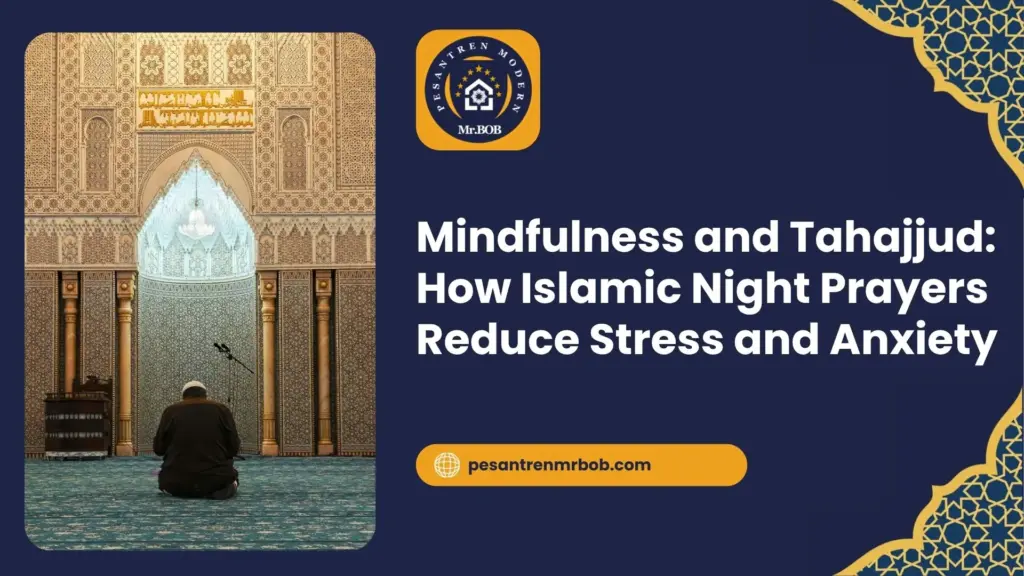
So, what exactly is Tahajjud? It is a voluntary night prayer, done specifically after you catch some sleep and right before the dawn breaks. It takes a lot of genuine discipline to pull yourself out of a warm bed, which is exactly why it occupies such a sacred slot in Islamic worship. Unlike the quick prayers we rush through during a chaotic workday, Tahajjud forces a private, quiet pause between you and God. There are no emails to check at 3 AM. No social media noise. This absolute silence is the main reason why so many people experience a profound mental reset during these hours.
The Modern Epidemic of Stress and Anxiety
We are currently living through a massive anxiety crisis. We treat being constantly busy like a badge of honor, leaving us walking around completely burned out. Most of us don’t even know what genuine stillness feels like anymore. Because of this, everyone is suddenly hunting for mindfulness apps and stress-relief hacks. But here is the fascinating part: Eastern spiritual traditions have been using these exact psychological relief valves for over a thousand years.
What Is Mindfulness?
Strip away the modern corporate buzzwords, and mindfulness is simply the practice of keeping your feet planted firmly in the present moment. It means stopping your brain from spiraling about next week’s problems or crying over last year’s mistakes. While modern psychology treats this like a brand-new discovery for mental health treatment, Islamic worship has always had this focused awareness built directly into its DNA. Tahajjud happens to be the ultimate expression of that state.
The Similarities Between Mindfulness and Tahajjud
If you look closely, the mental mechanics of mindfulness and Tahajjud are practically identical. During the night prayer, you intentionally disconnect from the grid and lock your attention onto spiritual contemplation. It is the exact same focus required by elite mindfulness exercises. The only difference? Tahajjud adds a deep layer of divine connection, made even better by the natural stillness of the night. It is hard to find that level of mental clarity anywhere else.
Prophetic Medicine and Modern Science: The Proved Health Benefits of Black Seed and Honey
The Psychological Benefits of Night Worship
There is something incredibly healing about the dark, quiet hours of the night. Without the constant interruptions of daytime life, your brain finally gets the breathing room to process heavy emotions. Praying at this hour feels like unloading a heavy backpack; you get to voice your deepest fears and anxieties without judgment, leaving you with a strange, beautiful sense of renewed hope by dawn.
How Tahajjud Encourages Emotional Regulation
Regulating your emotions doesn’t mean bottling them up until you explode. It means facing your worries head-on and then actively choosing to leave them in bigger hands. Tahajjud teaches you to do exactly that. Instead of letting anxiety run the show, you learn to break down your fears through structured prayer and reflection. Over time, this routine builds a type of emotional muscle memory that makes you incredibly resilient during the day.
The Role of Reflection in Mental Clarity
Think of regular self-reflection like wiping down a foggy windshield. When you never pause to check your thoughts, your view of life gets incredibly distorted. Tahajjud gives you an uninterrupted window to clean that glass. This level of deep personal inventory reduces the chaotic mental clutter that usually fuels panic, helping you make sharper choices with a lot more confidence.
Interestingly, even the National Institutes of Health published a piece in 2022 regarding sleep quality and spiritual practices. Their researchers found that meaningful, routine spiritual engagement directly correlates with better emotional stability and muscle relaxation. It turns out, engaging in these night routines helps stabilize our internal systems through multiple, overlapping pathways. When your mind is quiet, your sleep naturally fixes itself, creating a healthy loop that protects your overall mental health.
The Connection Between Sleep and Tahajjud
Waking up in the middle of the night might sound like a recipe for daytime exhaustion, but regular practitioners usually report the exact opposite. They feel lighter, sharper, and deeply refreshed. This happens because the psychological peace you gain from the prayer often outweighs the physical loss of an hour of sleep. When you manage your sleep schedule properly, incorporating Tahajjud doesn’t ruin your day—it actually fuels it with a steady stream of emotional stability.
Building Spiritual Resilience Through Prayer
Life is always going to throw curveballs—bad news, broken plans, and sudden letdowns are just part of the deal. Spiritual resilience is what keeps you from snapping when those storms hit. Tahajjud feeds this inner strength by constantly reminding you of a bigger picture. When you make it a habit to connect deeply at night, your default setting shifts from panic to hope, allowing you to navigate messy situations without losing your footing.
Finding Peace During Difficult Times
When things go sideways, it easily feels like you are trapped in a thick fog. Tahajjud works like a lighthouse in those exact moments of emotional turbulence. By stepping onto the prayer mat when everyone else is asleep, you instantly regain your sense of direction. It strips away that terrifying feeling of helplessness, offering a quiet sanctuary where you can catch your breath and rebuild your strength.
How Gratitude Reduces Anxiety
Gratitude is one of the most effective cognitive tools we have for breaking an anxiety spiral. It forces your brain to stop obsessing over what is missing and focus on what is already working. During Tahajjud, your prayers naturally balance out your worries with expressions of thankfulness. This simple mental shift rewires your perspective, making it much harder for negative thoughts to take root and hijack your peace of mind.
The Neurological Impact of Spiritual Practices
Neuroscientists are becoming obsessed with studying how spiritual habits affect physical brain tissue. Data shows that deep, focused prayer and meditation actively light up the areas of the brain responsible for attention control and emotional regulation. This means the idea that night prayers reduce stress isn’t just a comforting sentiment—it is a measurable, biological reality. The bridge between neuroscience and ancient faith is turning out to be incredibly solid.
Creating a Habit of Inner Peace
You can’t go to the gym once and expect a perfect physique, and mental well-being works the exact same way. Consistency is everything. Just like lifting weights builds physical muscle, a regular night prayer routine builds psychological stamina. By anchoring your week around these quiet moments of reflection, you create a long-term buffer against daily anxiety. Big results always come from these quiet, repetitive choices.
Tahajjud as a Form of Spiritual Mindfulness
At its core, Tahajjud is a highly advanced, spiritual version of mindfulness. It beautifully packages self-awareness, emotional release, gratitude, and divine connection into one single habit. While modern wellness trends usually focus just on the psychology side, Tahajjud feeds the soul at the same time. It’s a complete, holistic approach to human wellness that proves ancient traditions still hold the answers to our modern struggles.
Balancing Faith and Mental Health
We need to stop treating faith and mental health like two totally separate boxes. They belong together. Most progressive experts now agree that spiritual health is a massive pillar of overall psychological wellness. The best coping mechanisms combine practical real-world steps with deep spiritual anchoring. Tahajjud lets you take care of both sides simultaneously, giving you a much more balanced kit for handling whatever life drops on your lap.
The Yaqeen Institute highlighted this beautifully in their 2023 series on mental health and spiritual resilience, showing how these regular practices build the emotional endurance needed to survive adversity. Similarly, Stanford University’s research paper, The Anatomy of Peace in Islamic Practice (2019), breaks down how essential inner tranquility is for achieving true personal well-being. These perspectives make it clear that night worship isn’t just about ritual; it’s about using reflection and connection to completely lower your stress levels.
Conclusion
When you strip away the misconceptions, Tahajjud prayer is far more than an ancient religious obligation. It is a highly effective, practical space for mindfulness, emotional detox, and deep psychological healing right in the quietest block of the night. Both modern neuroscientific studies and ancient spiritual texts point to the exact same truth: stepping onto the mat at night is an incredible tool for reducing stress and reclaiming inner peace. By making this practice a consistent part of your life, you build a much healthier response to modern chaos. Ultimately, taking care of your mind through faith isn’t just a lifestyle option—it’s a beautiful, necessary commitment to honoring the balance within ourselves.
If you’d like to explore more insights and valuable information about Islamic boarding schools, feel free to browse other articles on the Pesantren Modern Mr.BOB. website. Stay updated with our latest programs, educational content, and student activities by following us on Instagram and TikTok. If you have any questions or would like personalized guidance, don’t hesitate to contact us via WhatsApp anytime. Our team is always ready to assist you.
References
- Journal of Religion and Health. Psychotherapeutic Effects of Islamic Prayer. Springer Link, 2021.
- American Psychological Association. Neurobiology of Meditation and Mindfulness. APA PsycNet, 2020.
- National Institutes of Health. Sleep Quality and Spiritual Practices. PubMed, 2022.
- Yaqeen Institute. Mental Health and Spiritual Resilience. Yaqeen Mental Health Series, 2023.
- Stanford Encyclopedia of Philosophy. The Anatomy of Peace in Islamic Practice. Stanford University, 2019.